
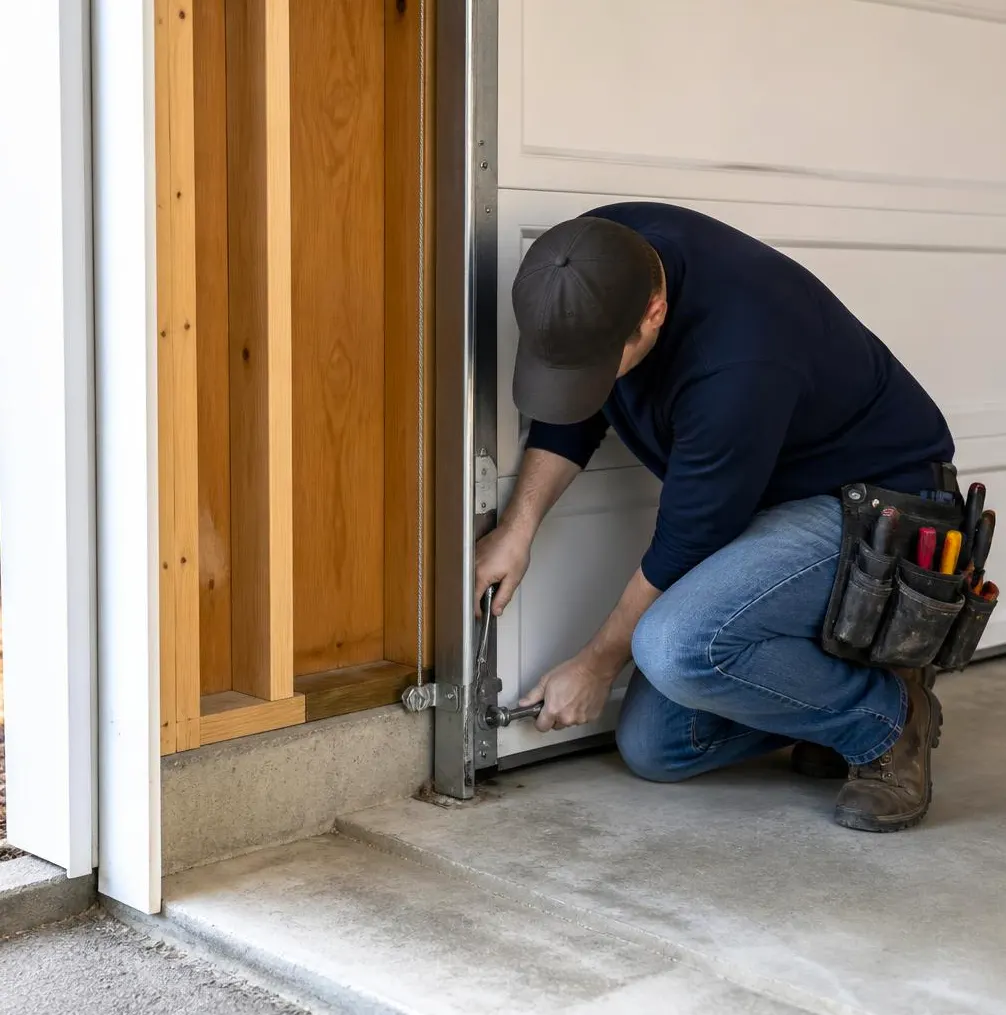
You pull into the garage at dusk and notice a thin bright line glowing along the bottom of the closed door — daylight where there shouldn't be any. Or you're sweeping up after one of our afternoon downpours and find a damp streak creeping across the concrete, or a dead wasp and a trail of pine straw that worked their way in overnight. Before you think springs or opener, check the bottom seal and weatherstripping. It's one of the cheapest, easiest fixes in garage door care, and it's often the whole problem.
Why This Happens in Our Climate
Bottom seals are vinyl or rubber, and this part of Alabama is hard on both. Summer heat dries the material out and cracks it. Humidity swells wood and steel panels enough that a seal that used to sit flush no longer does. Heavy, wind-driven rain during storm season pushes water sideways under a worn seal instead of letting it run off. Side and top weatherstripping wears out the same way — sun exposure, constant door cycles, and the occasional rodent or insect chewing at the edge.
Leave it alone and you get water intruding onto stored boxes and tool chests, conditioned air leaking out if the garage is attached to the house, and an open door for ants, roaches, lizards, and mice looking for shelter from the heat or the rain.
Tools You'll Need
- Tape measure
- Utility knife
- Replacement bottom seal (T-style, bulb-style, or bead style, matched to your existing track)
- Replacement weatherstripping for the sides and top (flush-mount or retainer style)
- Soapy water or silicone lubricant spray
- Flathead screwdriver
- Work gloves
- Broom and shop vac for cleanup
Step-by-Step: Replacing the Bottom Seal
- Close the door and pull the manual release cord to disconnect the opener, so the door can't cycle while you work.
- Measure the full width of the door and buy a replacement seal an inch or two longer than that measurement.
- Find one end of the old seal in the aluminum track at the bottom of the door and pull it straight out along the length. Brittle seals may come out in pieces — work slowly so you don't gouge the track.
- Clean the empty track with soapy water, clearing out old grit, dried caulk, and whatever's taken up residence in there.
- Feed the new seal into the track from one end. A little soapy water on the bead helps it slide instead of tearing.
- Trim the excess to within about half an inch of each end with a utility knife.
- Reconnect the opener, run the door through a full cycle, and check from inside with the garage lights off during daylight hours. Any gap will show up as a bright line.
Step-by-Step: Side and Top Weatherstripping
- Pull the old stripping free along with any nails or staples holding it to the jamb.
- Clean the surface and let it dry completely — skip this step on a humid day and the new adhesive or fasteners won't hold.
- Cut the new strip to length for each side and the top.
- Starting at the top and working down each side, fasten the strip so it sits flush against the door when closed, not just against the frame.
- Close the door and run your hand along the edges, or check for daylight, to confirm there's no gap left.
What's DIY and What Needs a Technician
Good candidates for a homeowner fix: replacing the bottom seal or perimeter weatherstripping on a door that still opens and closes normally and sits square in its frame. Parts typically run in the $20–$60 range for a bottom seal and $30–$80 for a weatherstrip kit (national ranges), and the job takes under an hour with basic hand tools.
Time to call a technician: if you've replaced the seal and still get a draft or water on one side no matter what, if the bottom panel is bent, rusted, or won't sit flat, if the seal keeps failing because the track is out of alignment, or if you notice grinding, sagging, or a door that seems to be fighting itself when it closes. A tired seal and a door that isn't built to handle wind-driven rain during storm season are two different problems — and only one of them gets fixed with a new strip of rubber.
When to Call Precision Garage Door of Jacksonville
If a fresh seal still leaks or won't sit flush, the real issue is usually track or panel alignment, not the seal itself. Precision Garage Door of Jacksonville's Preventive Maintenance visits check the whole system — track alignment, roller condition, spring balance, and opener force — so a new seal actually does its job instead of fighting a crooked door. If your door is older, warped, or rusted past the point a seal can fix, we also handle Garage Door Installation with doors sized and rated for the storms this region sees.
Call Precision Garage Door of Jacksonville, AL today to get your garage door sealed up right before the next round of storms rolls through.