
The Mistake: Treating the Door Like It's Already Gone
Here's what usually happens. One of you gets excited about turning the garage into a gym, workshop, or extra living space. The plan looks simple: insulate the walls, lay down some flooring, maybe add a window unit, and just leave the garage door alone since you won't be parking in there anymore. It's tempting because it feels like the cheap, fast part of the project. The door is already there, it already closes, why spend another dime on it?
The problem is that a garage door left in limbo, not really used but not properly sealed or insulated either, becomes the weak point in the whole conversion. In Jacksonville's climate, that weak point shows up fast.
Why an Ignored Door Causes Real Problems Here
A standard garage door, especially an older steel or wood-composite one, isn't built to separate a climate-controlled room from the outside. It's built to keep rain and wind off a car. Once you add drywall, insulation, and an air conditioner to one side of that door, you've created a temperature and humidity difference across a single thin panel that was never designed to manage it.
With the hot, humid summers and afternoon downpours common here, that difference causes condensation on the inside face of the door, especially overnight when temperatures drop. Moisture collects at the bottom panel and along the track, and over time that means:
- Rust forming on steel door panels and hardware, even if the door never opens
- Swelling or warping if any part of the door or trim is wood
- Mold or mildew starting behind drywall that's built too close to an unsealed door
- Musty smell in the new room that's hard to track down because it's coming from inside the wall cavity, not the room itself
None of this requires the door to be used. It just requires humid air meeting a cold surface, which is exactly what you get when one side of the garage is air-conditioned and the other side is a Calhoun County summer.
The Hardware Doesn't Get a Pass Either
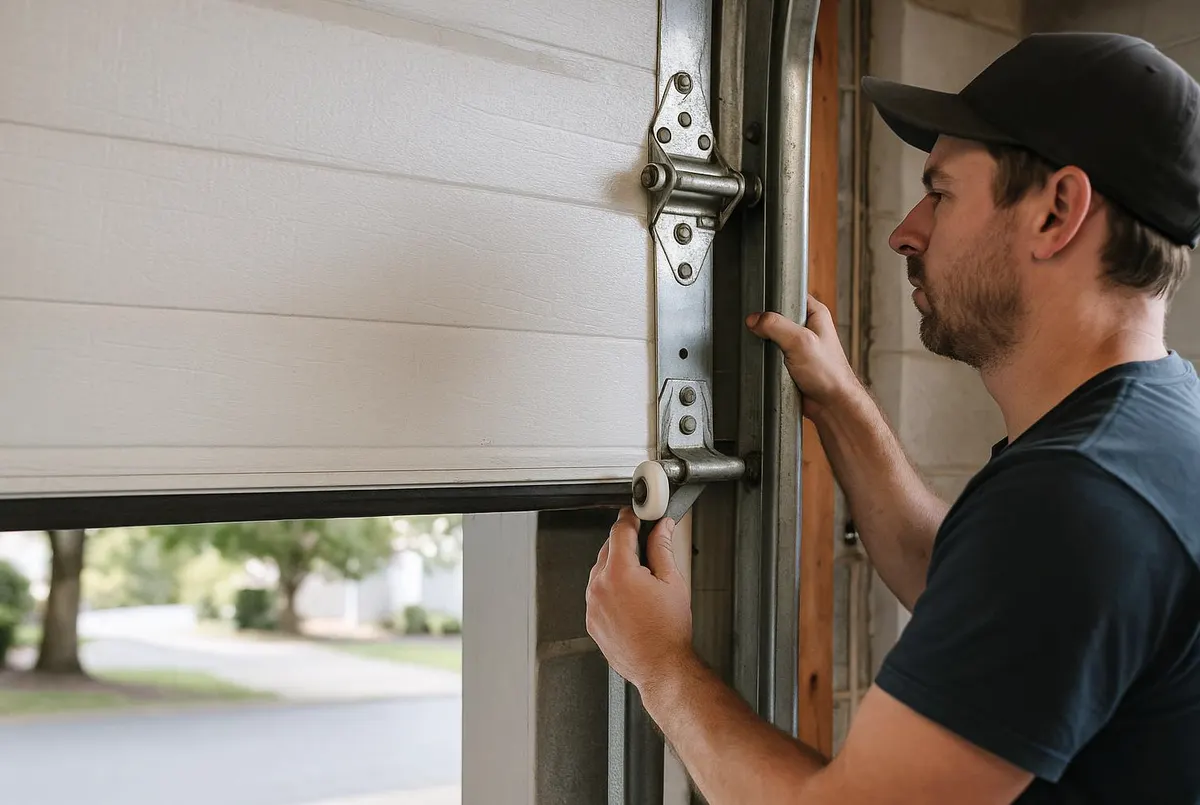
Even if you never touch the opener again, the springs are still under full tension, the rollers are still sitting in the tracks, and the cables are still attached. Unused doors don't get gentler with time, they get worse, because nobody is around to notice a fraying cable or a rusted hinge before it fails. If the door is still physically there, it's still a system that can break, sag, or become a safety hazard, whether or not you ever lift it again.
The Resale Argument
This is usually where the actual disagreement comes from. One of you wants to just wall off the door cheaply and be done with it. The other is thinking about selling the house in a few years and knows that buyers, inspectors, and appraisers all expect a garage to have a functioning garage door, even if the current owner uses it as a home gym. A permanently disabled or hidden-behind-drywall door can complicate an inspection and make the space look like an unpermitted conversion rather than a flexible bonus room.
Two Honest Options, Not One Right Answer
There isn't a single correct choice here, there's a trade-off, and it's worth deciding on together instead of defaulting to whichever is less work right now.
- Keep the door functional. Add an insulation kit to the panels, replace worn weatherstripping, and seal the bottom and side gaps properly. This costs more upfront but keeps the room flexible, protects against moisture, and preserves resale value. It also means the door still works for storage access or a future owner who wants the garage back.
- Formally replace the door with an insulated wall. This is a bigger, more permanent project involving proper framing and vapor barriers, done right, not just drywall stacked against an old door. It only makes sense if you're confident you'll never want vehicle access again.
What doesn't work long-term is the middle ground: leaving the old door in place, unsealed and unmaintained, and hoping the drywall on the other side holds up. That's the version that leads to rust, hidden mold, and an awkward conversation with a home inspector down the road.
When to Call Precision Garage Door of Jacksonville
If you're planning a garage conversion, it's worth having the door looked at before the drywall goes up, not after you notice a musty smell or rust streaks. Precision Garage Door of Jacksonville can inspect the current door and hardware, handle Preventive Maintenance on springs, cables, and rollers if you're keeping the door operational, or walk you through Garage Door Installation options if an insulated door makes more sense for the new room. Either way, you'll know what you're building around instead of guessing.
Planning a garage gym, office, or workshop in Jacksonville, AL? Call Precision Garage Door of Jacksonville first and get the door squared away before the walls go up.